
Underpinning 101, Part 2: How It Actually Happens
Overview
In Part 2 of this series, Westrose President Tom Martino takes us inside the construction process once an underpinning project begins. From excavation and structural sequencing to waterproofing and rebuilding below-grade systems, this is a closer look at what’s happening beneath the surface and how it transforms a lower level into functional living space.
A behind-the-scenes look at how a basement is lowered, reinforced, and transformed into fully usable living space.
Where the Work Begins
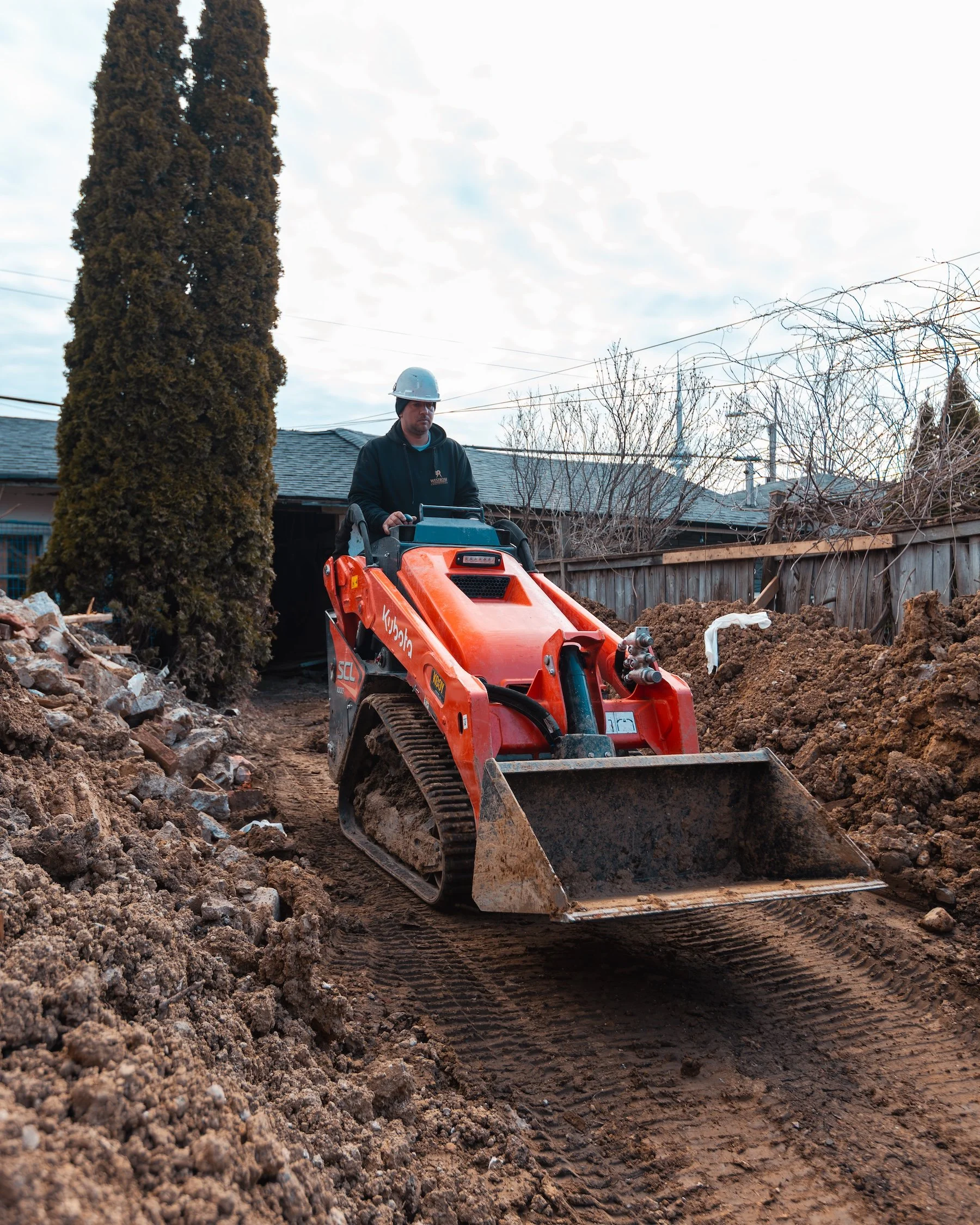
So, you’ve decided that the lower level of your home should finally live up to the standards of the rest of the house. Goodbye dwarfed ceilings, Hello Underpinning.
By lowering the basement and strengthening the existing foundation, underpinning can elevate the space to upstairs standards while optimizing valuable square footage.
Before you embark on this major undertaking, let’s take a closer look at what’s involved.
As promised in Part 1 of our series, Westrose President Tom Martino will walk us through the process step by step, covering every critical stage, from excavation and structural support to waterproofing and the final slab pour.
As hinted earlier, he doesn’t hide the fact that this is one of his favourite parts of construction. When asked why he loves it so much, he says with a laugh, “I’ve always loved digging holes.” Seriously though, “With underpinning, there’s real satisfaction in seeing a house almost grow longer legs as you extend the basement below.”
What excites Tom most goes beyond excavation. It’s the transformation, the possibilities that are unearthed so-to-speak, in making an older home become stronger, smarter, and ready for a completely new chapter.
Breaking Ground in Stages
Every underpinning project begins with one key decision: how much height is being gained. In most GTA homes, that typically means lowering the basement by roughly two to three feet, depending on the structure, soil conditions, and the homeowner’s goals.
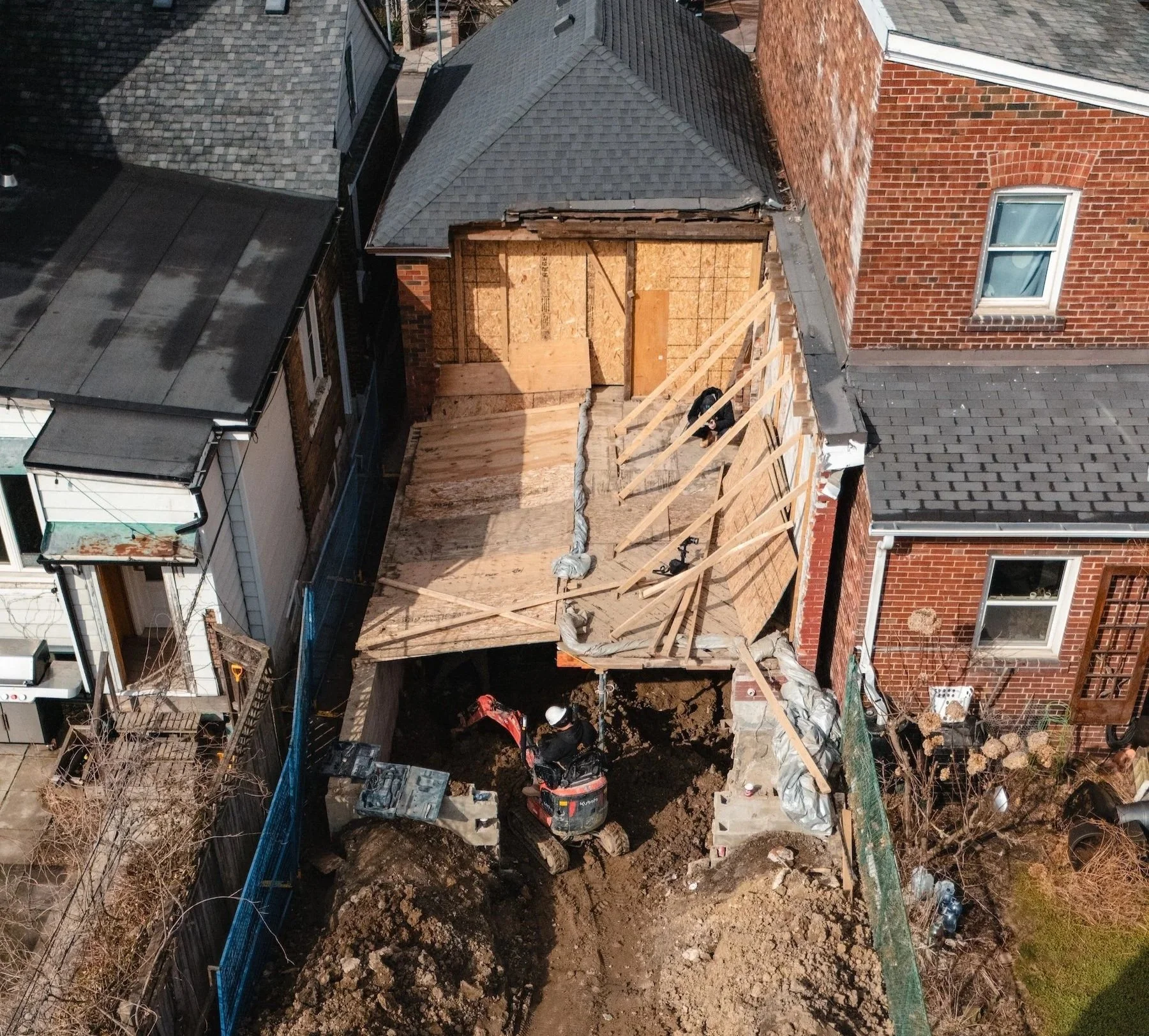
From there, the existing foundation is divided into small, carefully planned sections so the home is never exposed all at once.
“We never open the whole foundation in one shot,” Tom explains. “It’s done in stages so the house is always supported.”
One section is excavated and reinforced with new concrete while neighbouring sections continue to support the structure. Once complete, that newly strengthened section helps carry the next phase of work. The sequence continues around the perimeter until the full foundation has been safely lowered.
Where load-bearing posts exist, temporary supports are installed while new steel columns and deeper footings are added to permanently carry the home at its new level.
“Seeing how the house stays supported while each section is rebuilt is remarkable,” Tom says. “It’s a real feat of engineering.”
Your Home Down Under
Once the perimeter work is complete, attention shifts below grade.
The remaining soil inside the basement is excavated to reach the new floor height. This is often the first moment homeowners truly see the scale of the transformation. What was once a low, compressed basement begins to open vertically and feel entirely different.
But what happens down under is about more than depth.
A full waterproofing system is installed around the foundation, along with weeping tile that directs groundwater toward a sump pit. This helps protect the structure and manage moisture over the long term.
At the same time, underground plumbing is upgraded or replaced where needed, including rough-ins for bathrooms, laundry, or additional fixtures. These systems are connected to backflow protection to guard against municipal sewer backup.
“We often remove old clay pipes that have collected debris or roots over the years,” Tom says. “It’s satisfying to replace those old systems with new infrastructure that performs properly.”
A gravel drainage layer is then added before the new concrete slab is poured, completing the rebuilt basement floor.

Get Your Hands On Our Free
Home Buyers Checklist!
What Homeowners Should Expect
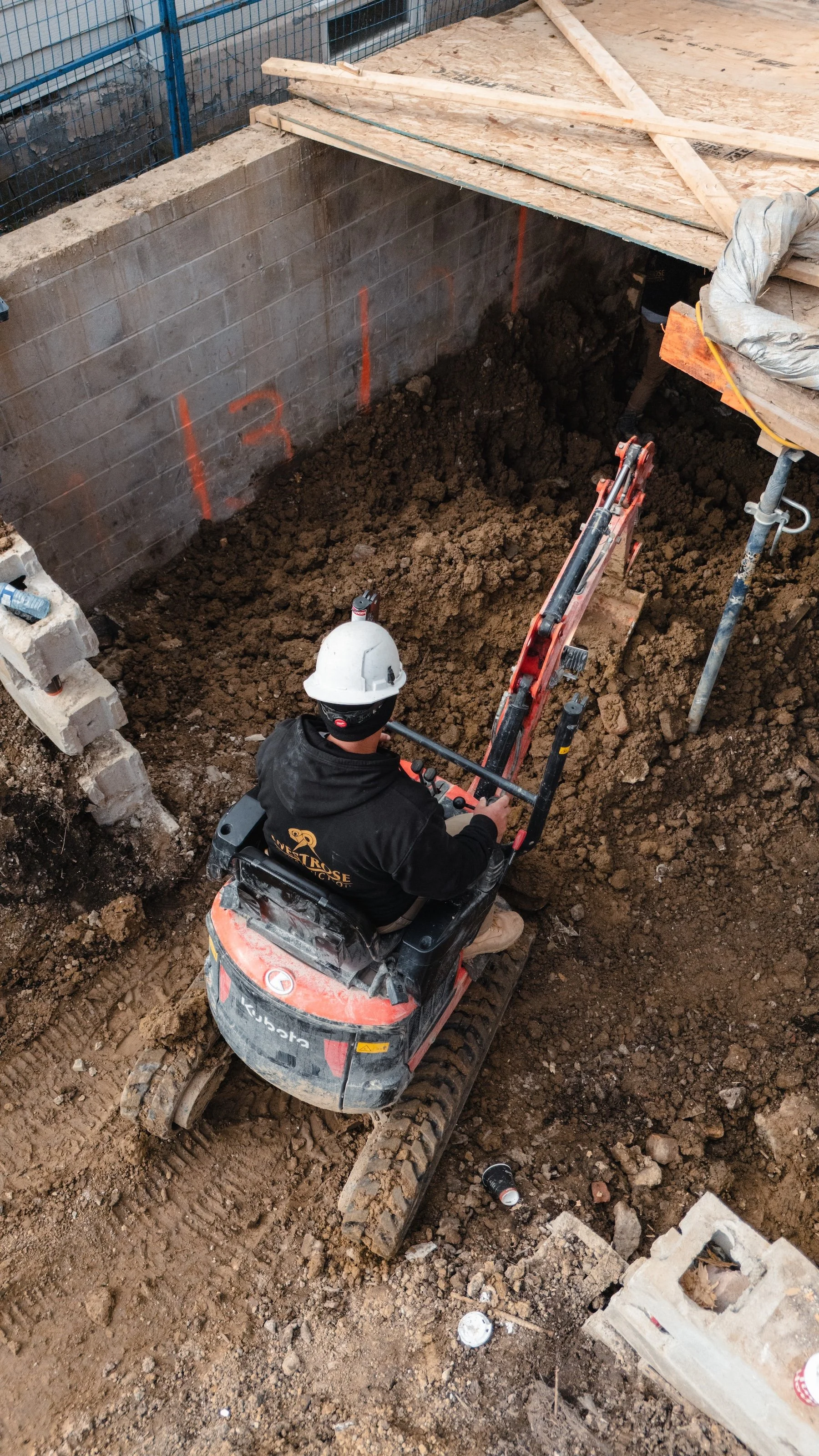
Underpinning is a phased construction process, not a single renovation event. Timelines vary depending on the size and complexity of the home, along with site access and engineering requirements.
For homeowners researching basement underpinning in Toronto, it’s important to understand that this is active structural work from start to finish.
Whether a home remains occupied during the project depends on the scope of work and site conditions. Every property is different, and experienced planning helps determine the right path forward.
What remains constant is sequencing. Each stage must be completed in order for the structure to remain stable and the new depth to be achieved safely.
From Structure to Living Space
Once the foundation is reset, the lines between upstairs and downstairs living begin to blur.
What was once constrained by low ceilings or an awkward layout can now be reimagined as anything the home needs most: a spacious family room, private guest suite, home gym, entertainment lounge, dedicated office, or even an income-generating rental space.
For Tom, that transformation is the true reward of underpinning.
“A lot of times, that overlooked square footage becomes some of the most valuable and enjoyable space in the home.”
The result is more than added room(s). It’s a fundamental shift in how the house functions, where the lower level becomes fully integrated into modern living rather than treated as secondary space.
Interested in starting your project with Westrose Construction?
Click below and let’s talk!