
What to Consider Before Renovating Your Toronto Home’s Façade
Overview
Renovating a home’s façade is one of the most effective ways to improve curb appeal and long-term value. In Toronto, successful exterior renovations balance thoughtful design, zoning regulations and durable materials suited to the city’s climate. Here’s what homeowners should consider when planning a façade renovation or custom home exterior in the GTA.
From the distinctive Bay-and-Gable houses found throughout Old Toronto to the stately homes of Lawrence Park, Toronto’s neighbourhoods are defined as much by their architecture as their tree-lined streets.
Today, many of these homes are being renovated, expanded or rebuilt altogether. While modern updates can breathe new life into older properties, dramatic departures from surrounding homes can sometimes create a jarring mix of styles.
“Toronto’s neighbourhoods have very strong architectural identities, and façades contribute significantly to the character of the streetscape,”
— Tom Martino, president of Toronto-based custom builder Westrose Construction.
Whether for a custom home or renovation, thoughtful façade design helps ensure the exterior complements the character of the street rather than competing with it.
Start with zoning and heritage considerations
Before homeowners begin selecting materials or reimagining the look of their exterior, it’s important to confirm what’s permitted for the property.
“In Toronto, many homes are located in Heritage Conservation Districts or have specific zoning setbacks, height limits or material restrictions that can affect what you’re allowed to change on the front façade,” Tom says.
Confirming those requirements early can prevent costly redesigns and delays later in the process. In some cases, renovations completed without the proper permits may result in stop-work orders, fines or the requirement to remove unapproved work.
| Consideration | Why it Matters |
|---|---|
| Zoning Regulations | Determines setbacks, height limits and allowable façade changes. |
| Heritage Status | Homes in Heritage Conservation Districts may have restrictions on exterior alterations. |
| Permits | Required for many exterior renovations to ensure compliance with building codes. |
| Material Selection | Durable materials such as brick, stone and fibre cement perform better in Toronto’s climate. |
| Architectural Fit | Referencing neighbourhood styles helps maintain a cohesive streetscape and protects property value. |
Respect the character of the neighbourhood
Once zoning and permit requirements are understood, the design conversation can begin in earnest.
Across Toronto, residential streets are evolving as older homes are renovated or replaced with larger custom builds. Without thoughtful design, those updates can sometimes create a patchwork of competing styles.
“Referencing the original style helps maintain that sense of cohesion and context,” Tom says.
Rather than replicating historic architecture exactly, successful projects often take cues from surrounding homes by drawing on similar proportions, rooflines or materials while introducing contemporary elements.

A well-designed front entry, coordinated materials and clean architectural lines can significantly enhance a home’s curb appeal.
Modernize thoughtfully
Updating a façade doesn’t mean exactly copying historic styles. In many cases, the most successful renovations reinterpret traditional elements in a cleaner, more contemporary way.
Maintaining traditional window proportions while introducing modern black-framed windows, for example, can instantly refresh a home’s appearance. Replacing dated siding with brick, stone or wood cladding, or simplifying decorative trim can also give an older façade a more current look while still respecting its architectural origins.
“When a façade uses stone, stucco, siding and brick all at once it can feel chaotic rather than intentional. Limiting the palette keeps the architecture cohesive.”
— Tom Martino
Get Your Hands On Our Free
Home Buyers Checklist!
Choose durable materials and use them wisely
Exterior materials in Toronto must withstand freeze- thaw cycles as poorly chosen materials that are not up to dealing with weather conditions such as snow, wind and humidity can take a toll.
“Durability is critical,” Tom says.
High-quality masonry, natural stone and fibre cement cladding are commonly used for their resilience. Just as important are the construction details behind the finishes, including proper flashing, drainage, and high-performance windows, which help protect the building envelope over time.
Restraint also plays a role in good exterior design.
“When a façade uses stone, stucco, siding and brick all at once it can feel chaotic rather than intentional,” says Tom. “Limiting the palette to two materials, three at most, keeps the architecture feeling cohesive.”
Another issue builders sometimes see is decorative detailing that isn’t properly scaled.
“Fake heritage details with the wrong proportions can feel like architectural costume jewelry.” He continues, “Noting that poorly scaled columns, trim or mouldings can cheapen the overall façade.”
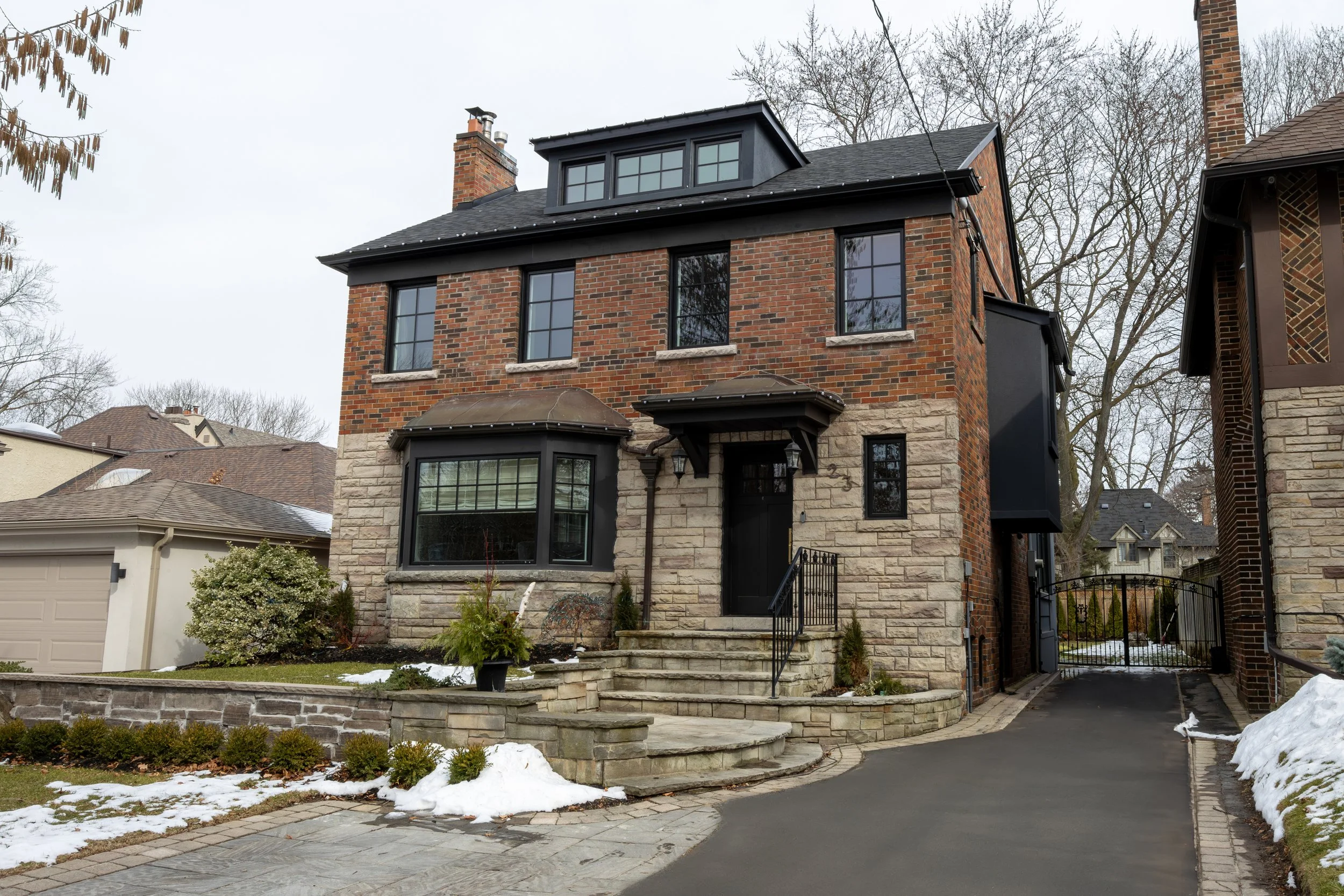
Natural stone and high-quality masonry are durable choices for Toronto façades, offering both longevity and a timeless appearance
The details that elevate curb appeal
While materials and proportions set the foundation for a strong façade, finishing touches often have the biggest visual impact.
“Small elements like a well-designed front entry, upgraded lighting, landscaping and architectural millwork often have an outsized impact on curb appeal,” Tom adds.
When homeowners combine thoughtful design decisions with a clear understanding of local regulations and materials suited to Toronto’s climate, the result can elevate not only the home itself but the entire street.
FAQs
-
Modernizing a façade often involves simplifying architectural details, updating exterior materials such as brick, stone or fibre cement cladding, and introducing contemporary window frames while maintaining the home’s original proportions.
Interested in starting your project with Westrose Construction?
Click below and let’s talk!